
In France, the average time spent commuting to work is 50 minutes per day, according to INSEE. A recent study by the Observatoire des Inégalités indicates that 15% of workers spend more than 1 hour and 30 minutes on their daily commutes, a proportion that has increased over the past ten years.
No rule carved in stone dictates the ideal distance between home and the office. This figure varies according to the density of cities, the professions practiced, and the real estate policies of companies. Today, the effects of these daily commutes on productivity, morale, and health are reflected in surveys, reports, and even discussions in open spaces.
Understanding Current Trends in Commuting in France
In France, the issue of commuting is far from trivial. Living in Paris or in the provinces tells a different story. In the Paris region, an average duration of 64 minutes to reach one’s workplace is the norm, while the rest of the country stabilizes at 41 minutes. This significant gap highlights the impact of urban density, public transport availability, and real estate prices.
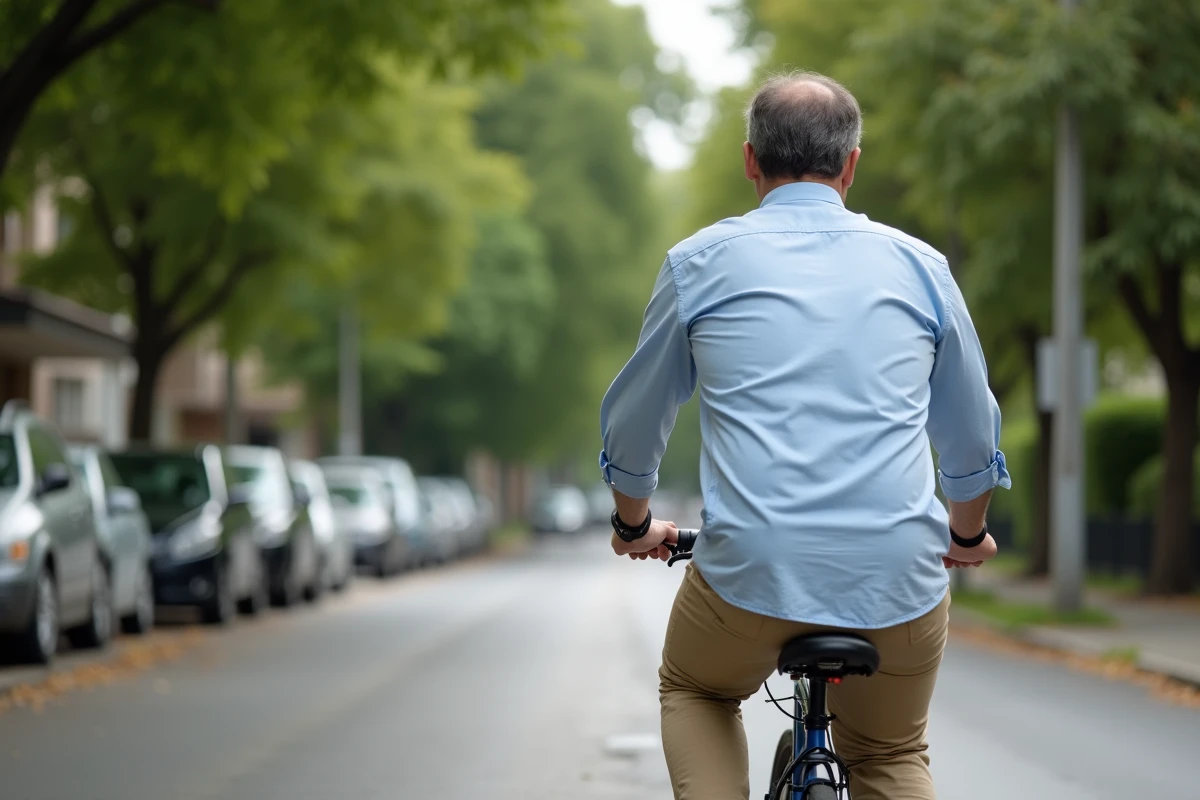
In large metropolitan areas, everything pushes to shorten daily commutes. Finding a balance between time spent commuting and job demands becomes a personal quest. Bicycles, long underestimated, are gradually gaining ground: according to ADEME, the number of cyclists for commuting has doubled since 2019, driven by the creation of bike lanes and dedicated subsidies. Employees are testing new strategies to lighten their days:
- They alternate between remote work and on-site presence according to team needs,
- They prefer shared or soft transport whenever possible,
- They adjust their schedules to avoid peak hours.
But outside urban centers, the car remains king. Residents of rural or suburban areas extend their days on the road, dependent on their vehicles and a sometimes deficient transport network. The consequence: persistent disparities from one territory to another, impacting both wallets and the environment. If you wish to delve deeper into these issues and compare possible trade-offs, the resource ‘Distance travail : quelle distance idéale pour se rendre au travail ? – J’entreprends Au Féminin’ on the J’entreprends Au Féminin site offers an in-depth analysis based on the latest statistics.
What Criteria Define an Ideal Distance Between Home and Workplace?
Behind the notion of ideal distance between home and workplace lies a multitude of criteria, sometimes very personal. The first is the duration of commutes: few are those who accept more than 30 to 45 minutes to reach the office on a regular basis. Repeated five days a week, this time eats away at energy, family life, and leisure.
The mode of transport changes everything. The same 20-kilometer journey can seem bearable if it is done on a direct RER train or by bike on a secure path. But if it involves getting stuck in traffic morning and evening, fatigue looms. Between the location of company sites, city density, transfers, and traffic jams, the perception of distance transforms completely.
For some, choosing their home means prioritizing peace, greenery, and space. They are willing to accept a few extra kilometers to gain well-being at work and serenity. Others, on the contrary, aim for immediate proximity to schools, shops, or transport, even if it means reducing living space. The distance between home and workplace becomes a reflection of each household’s compromises.
It is also impossible to ignore the real cost of these commutes. Those who opt for deduction of actual expenses on their tax return rely on the mileage rates updated each year by the administration. Before extending their route, it is therefore better to carefully weigh the relationship between incurred costs and expected benefits, both professionally and personally.
Concrete Impacts of Commute Times on Professional Life and Optimization Levers for Employers
Lengthening one’s commute time has direct repercussions. Chronic fatigue, decreased concentration, irritability: the distance between home and office creeps into the lives of employees and ultimately weighs on the workplace atmosphere. In France, each commute lasts an average of 26 minutes according to INSEE, but in Île-de-France, some people spend an hour or more daily, both in the morning and in the evening.
In light of this reality, the mobility plan takes a central role within the company. To limit the carbon footprint and rationalize travel expenses, management is multiplying initiatives:
- Carpooling is organized, reducing traffic and sharing costs;
- Some employers offer an electric bicycle or support the purchase of such vehicles, thus promoting clean travel;
- The bicycle mileage allowance is becoming more common, encouraged fiscally and favored by employees who wish to change their pace.
The detection of actual expenses is also a lever to lighten the bill. The updated mileage rates allow for precise calculation of incurred costs, providing clarity for those questioning their organization. On the employer side, HR policies are evolving: the issue of relocation is now considered as a tool for attractiveness or support, integrated into the management of career paths and the needs of the company.
In an age where every minute counts, the distance between home and office is no longer just a matter of geography: it shapes the balance of lives, redefines priorities, and sharpens strategies. Tomorrow, the question might not be “how far am I willing to go to work?” but “how can I make every commute truly count?”.