
The site alinearchimbaud.fr publishes articles on a variety of topics, including online manhwas, emergency locksmiths in Côtes-d’Armor, and heating engineers in Morbihan. Amid this editorial mosaic, a “Home” section offers advice related to interior design. The site’s name refers to that of a former senator from Seine-Saint-Denis, known for her interventions on environmental health and social issues in Parliament.
This coexistence between a political surname and generalist content raises a preliminary question: who writes these articles, and on what factual basis do they rest?
Identifying the author behind a home advice site
Before following a recommendation on flooring or material choices, the first step is to check who signs the content. On alinearchimbaud.fr, the homepage displays the subtitle “My news,” without specifying whether the person behind the site is indeed the former parliamentarian or a third party exploiting this domain name.
The Senate reports document Aline Archimbaud’s interventions on the modernization of the healthcare system, amendments related to care or training. None of these parliamentary works address decoration, design, or home renovation. The link between the political background and the home articles remains elusive in the available public sources.
Several reflexes can help gauge the reliability of a site before using it for projects or purchases:
- Look for an “About” or “Legal Notices” page that clearly identifies the publisher, their credentials (professional, journalist, enthusiast), and their address
- Check if the articles cite their sources (standards, manufacturers, documented feedback) or limit themselves to vague formulations
- Cross-reference the domain name with public databases (Whois, commercial registry) to find out who owns the site
Browsing the content published on Aline Archimbaud, we see that the home section coexists with seemingly unrelated themes, which is not a flaw in itself but complicates the assessment of editorial expertise on a specific topic.
Home content on a generalist site: what it means for the reader

A site that simultaneously covers manga, emergency locksmithing, and interior decoration operates under a so-called “generalist” or “multi-niche” editorial model. This format is common on French-speaking websites. It is not synonymous with poor quality, but it requires the reader to do additional verification work.
On a media outlet specialized in housing, the editorial team generally relies on journalists trained in the sector, partnerships with craftsmen, or field feedback. A generalist site does not always have this verification chain. Articles may be written by web editors with no connection to the subject matter.
This does not mean that every piece of advice published is incorrect. An article on choosing flooring can be perfectly accurate. The problem arises when the reader has no way to distinguish documented content from a text compiled from other sites, without technical validation.
The case of local rankings
Among the site’s publications, there are rankings of professionals by department (locksmiths, heating engineers). These formats pose a particular challenge. Without an explained selection method, a ranking reflects only an opaque editorial choice. The reader does not know if the listed craftsmen were contacted, evaluated on specific criteria, or simply found through an online search.
For a renovation or design project, relying on a ranking whose methodology is not described amounts to trusting an anonymous recommendation.
Check the sources of an article before starting work
When an article recommends a type of insulation, a installation technique, or an average budget, three elements deserve to be checked before making any decisions.
The first concerns the publication date. Construction standards and financial aids evolve regularly. An article from two or three years ago may recommend a tax device that no longer exists or a material whose certification has changed.
The second pertains to the cited references. Reliable content refers to identifiable regulatory texts (construction code, DTU, NF standards) or manufacturer data. An article that claims a material “holds up well to moisture” without specifying a standard or test does not provide usable information for a project.
The third relates to the consistency between the advice given and the local context. A general article on heating does not take into account your region’s climate, your home’s orientation, or its year of construction. Advice relevant for a house in Brittany may be unsuitable for a building in Provence.
When the site mentions no sources
The excerpts available from the site alinearchimbaud.fr do not document verifiable feedback on domestic arrangements. No testimony attributed to an identified professional, no reference to a technical organization appears in the analyzed content. This absence does not prove that the advice is incorrect, but it prevents any independent verification.
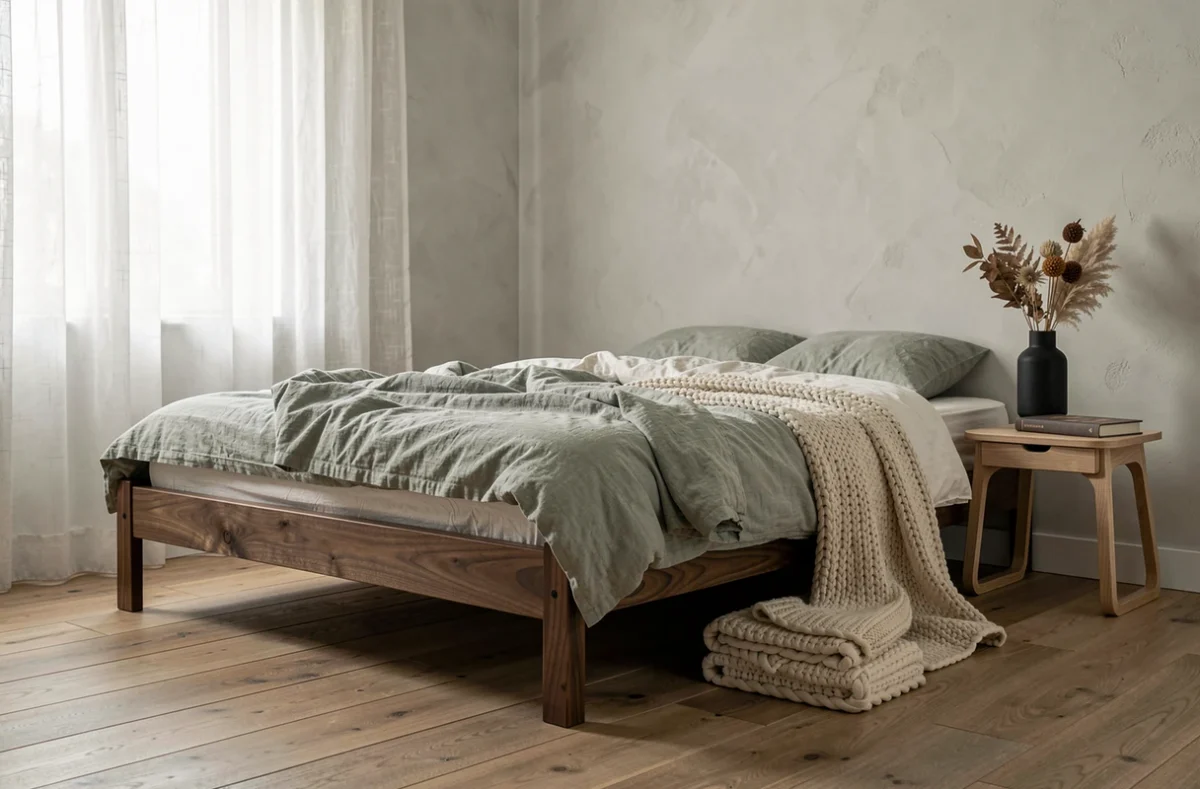
Building your own framework for reading online home advice
Rather than rejecting or adopting a site’s publications wholesale, a cross-referencing approach remains the most reliable. Advice read on a generalist site can serve as a starting point, provided it is compared with at least two other independent sources.
- Manufacturers’ and distributors’ websites publish technical sheets with measurable data (thermal conductivity, fire rating, warranty)
- Forums for experienced DIYers allow you to spot field feedback on a product or technique, including limitations and failures
- Publications from professional organizations (building federations, local energy agencies) provide up-to-date regulatory frameworks
No online article replaces a diagnosis conducted by a professional on-site. Web content, regardless of the site, provides avenues for reflection, not prescriptions tailored to a specific situation.
The site alinearchimbaud.fr can feed into a watch on trends or design ideas. The caution lies simply in not making it a sole source of decision-making, especially when neither the precise identity of the author nor the writing method is documented.