Comparing support systems for seniors involves measuring the concrete gaps between what regulations provide, what families know, and what is actually mobilized. Since January 2024, several texts have changed the very nature of home services, their scope, and the rights available to beneficiaries. This article reviews the most useful resources for supporting seniors on a daily basis, based on recent developments.
Home autonomy services: what the reform changes for seniors
The former SAAD, SSIAD, and SPASAD are gradually being replaced by Home Autonomy Services (SAD). This merger, rolled out since 2023, is not just a change of acronym. SADs must now integrate daily assistance and care orientation within the same structure.
For families, the practical consequence is direct: rather than only comparing hourly rates among providers, it is essential to check if the chosen service has an organization that includes access to care. A SAD that does not offer this integration does not fulfill its new specifications.
Another major change stemming from decree n° 2023-608 of July 13, 2023: home caregivers now have a formal mission to identify vulnerabilities. During each home evaluation, they must identify signs of loss of autonomy, isolation, and difficulties faced by caregivers.
The caregiver is no longer just an executor of practical tasks; they become a prevention actor. Families looking for reliable resources to guide an elderly relative can rely on the site avantage-seniors.fr for seniors, which centralizes updated information on these systems.
APA and social connection: an underrecognized right since January 2024
The APA home aid plan covers GIR 1 to 4, but a recently added line remains underutilized. Since January 1, 2024, under article D.232-8-1 of the Social Action and Families Code (decree n° 2023-1431 of December 30, 2023), dedicated time for social connection can be included in the APA aid plan, up to 9 hours per month.
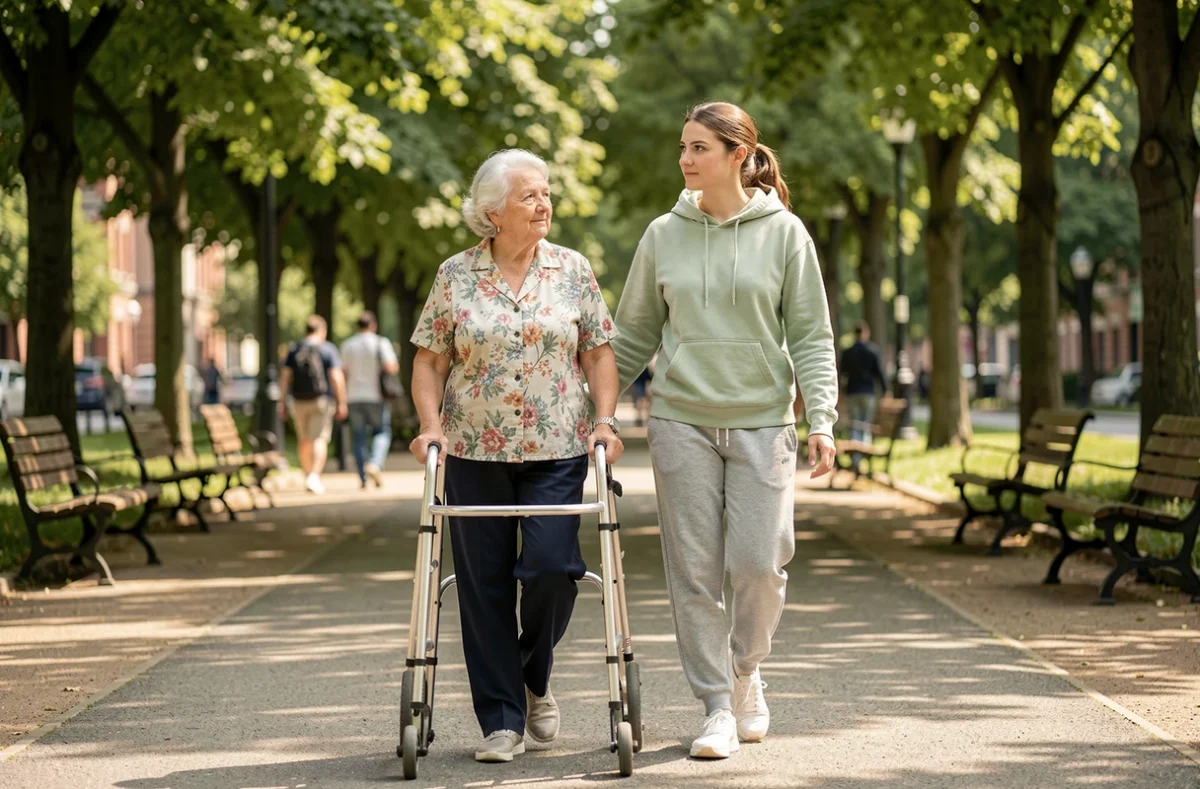
This time can fund accompanied outings, friendly visits, or activities promoting social connection. The measure directly targets isolation, identified as a factor accelerating loss of autonomy.
| Element of the APA aid plan | Classic scope | New for 2024 |
|---|---|---|
| Assistance with essential acts | Bathing, dressing, meals | Unchanged |
| Assistance with home maintenance | Cleaning, laundry, shopping | Unchanged |
| Dedicated time for social connection | Not provided | Up to 9 hours per month (GIR 1 to 4) |
| Identification of vulnerabilities | Not formalized | Mandatory mission of SADs |
However, this budget line is not automatically offered by medical-social teams during the GIR evaluation. Families must explicitly request it when developing or revising the aid plan.
Portal for-the-elderly.gouv.fr: official directories and simulators
The national portal for-the-elderly.gouv.fr remains the reference institutional resource. It offers geolocated directories to search for home services, nursing homes, or day care by department.
Its main advantage over private platforms: data on facility rates are self-reported but regulated, and the financial aid simulator includes all national programs (APA, ASH, tax credit). This portal also covers temporary accommodation and day care solutions, often underutilized by caregivers who are unaware of their existence.
The limitations are known: the directories do not provide information on the actual quality of service, waiting times, or availability of spots. For this information, local information points (formerly CLICs, now integrated into funding conferences) remain the most reliable channel.
Supporting seniors: criteria for evaluating a home service
Comparing home care services requires looking beyond just the hourly rate. Three criteria help distinguish services that meet the real needs of seniors:
- The service’s ability to ensure the identification of vulnerabilities in accordance with the July 2023 decree, which implies specific training for caregivers and a connection with the attending physician
- The existence of care-assistance coordination within the same structure (integrated SAD model), which prevents families from having to manage the schedules of the housekeeper and nurse separately
- The possibility of including social connection activities in the intervention plan, not just household or hygiene tasks
A service that only fulfills the function of executing practical tasks no longer meets the current regulatory framework. Families supporting a relative with loss of autonomy should ask these questions from the first contact.
Support programs for caregivers
Family caregivers have access to free email programs covering the initial steps in the caregiver role, home maintenance, or financial aid. These programs provide structured content over several weeks, with practical sheets and concrete tools.
Temporary accommodation and day care are underutilized resources by caregivers. These systems allow for temporarily entrusting a relative to an appropriate structure, giving time to breathe or manage personal obligations. Their funding can be partially covered by the APA.

The regulatory developments of 2023-2024 have expanded the scope of support for seniors well beyond housekeeping. Social connection, identification of vulnerabilities, and care-assistance coordination are now formal components of home maintenance. The challenge remains their adoption by families, who often have to claim what they are entitled to.