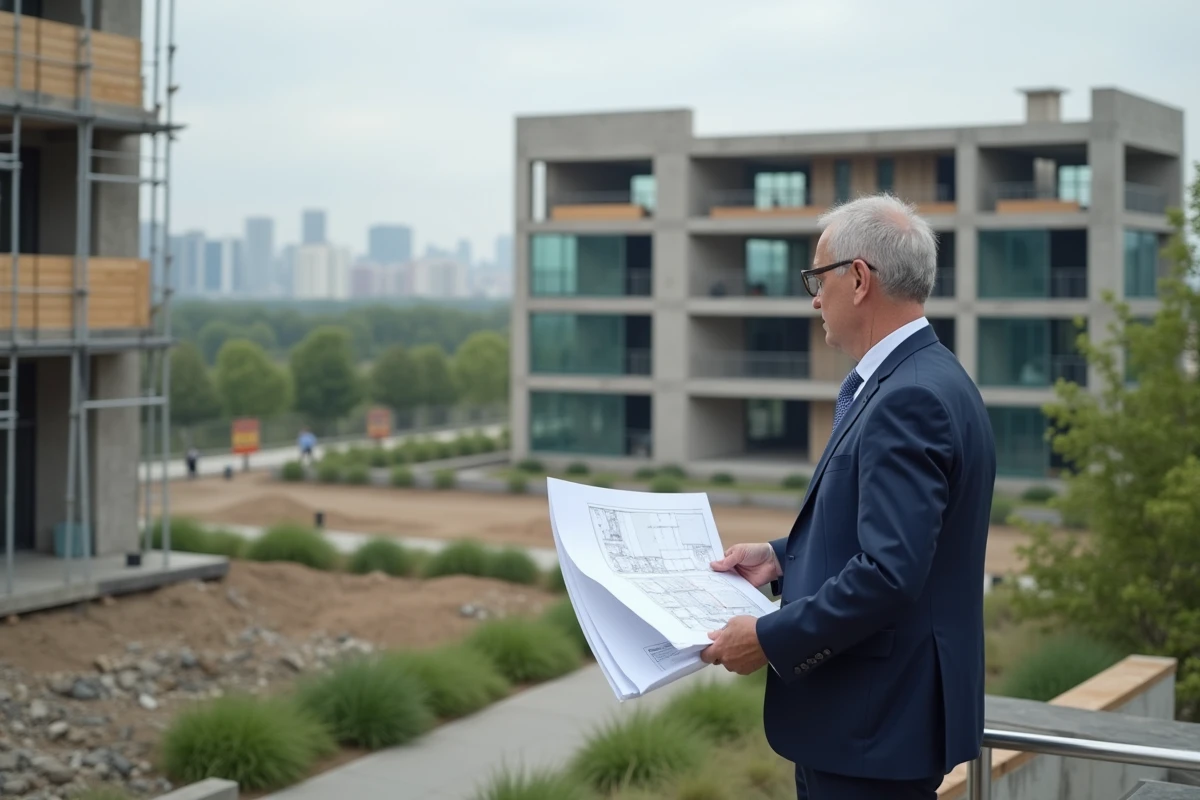
The roadmap has suddenly tightened: starting in 2024, every building permit for a new building must meet stricter carbon emission thresholds, imposed right from the drawing board. Project owners are faced with a new set of constraints: energy efficiency, monitored material choices, and a gradual increase in requirements, depending on the nature of the proposed project.
Some temporary or specific buildings still benefit from exemptions. However, the vast majority of residential or commercial constructions are now subject to enhanced controls. Professionals must prove, with supporting documentation, their technical choices and commit to flawless traceability. Technical innovation and rigor are becoming the new standard in the sector.
RE2024: Understanding the Major Changes for the Construction Sector
The environmental regulation version RE2024 is revolutionizing construction. From now on, every new building must incorporate a rethought energy performance and comply with much stricter carbon thresholds. The goal is clear: reduce the carbon footprint from the initial sketches, focusing on renewable energies and bio-sourced materials at the heart of every construction decision.
The ecological transition is no longer just about slogans; it is now a requirement in every building permit application. It is now necessary to demonstrate exemplary environmental energy performance. Project owners must integrate the issue of greenhouse gas emissions throughout the building’s life cycle. This involves thoughtful choices for materials, a precise analysis of primary energy consumption, and attention to the durability and reversibility of constructions.
The impacts of RE2024 on new building permits change the game: it is now necessary to justify every technical choice, demonstrate the integration of renewable energies, and provide a detailed assessment of the new thresholds for emissions. Architects, project owners, and companies must reinvent the way they build, with a shared goal: to construct buildings that are efficient, resilient, and prepared for carbon neutrality.
What Are the Obligations for New Building Permits?
The building permit under RE2024 is no longer just a simple administrative file. From now on, every project must meet a demanding specification focused on energy performance and reducing environmental impact. Submitting a file requires proving the project’s compliance with specific rules, controlling every step, from material selection to final thermal performance.
The Main Requirements to Meet
To validate their file, professionals must justify several specific points:
- Prove the primary energy consumption of the building, incorporating all regulated uses.
- Present a detailed study on the integration of renewable energies and the reduction of conventional consumption.
- Demonstrate mastery of energy efficiency through bioclimatic design and optimized thermal envelopes.
- Commit to greenhouse gas emissions thresholds that comply with the trajectory set by the new regulation.
The permit application must be accompanied by a certificate written by a qualified professional. This official document, provided by a study office or an architect, certifies that the project aligns with regulatory thresholds: energy performance, controlled carbon impact, appropriate material choices. It is advisable to anticipate these requirements from the design phase to avoid administrative blockages or unforeseen delays.
Success depends on the ability of teams to work hand in hand. Architects, study offices, and companies must design every detail, from materials to energy management, with the regulations in mind. The instructing services require solid documentation and impeccable traceability, pushing everyone to enhance their skills and refine every step of the project.

Anticipating Issues and Achieving Compliance Today
Embracing the ecological and energy transition is no longer a matter of choice. Architects, developers, project owners: all must rethink the design of each project to meet the requirements of RE2024 regarding environmental energy performance. The watchword circulating in the sector: anticipate, to avoid unpleasant surprises.
From the pre-project phase, it becomes strategic to integrate concrete adaptation pathways. Prioritize energy performance from the outset, combining bioclimatic design with the selection of low-emission materials. Investing in heat pumps, relying more on renewable energies, choosing high-performance technical solutions: these are the new reflexes to adopt for a smooth progression.
Here are three action levers to prioritize to align with RE2024:
- Evaluate the environmental impact from the pre-project phase and adjust accordingly.
- Optimize the use of renewable energies to significantly reduce the building’s carbon footprint.
- Opt for bio-sourced or low-emission materials to meet the thresholds imposed by the regulation.
Training teams, mastering new calculation tools, anticipating checks: success relies on collective skill enhancement. RE2024 imposes a strict and demanding framework, but it also offers the opportunity to build differently, with more rigor, resilience, and the certainty of meeting the challenges of the real estate market. Building today also means preparing the city of tomorrow.