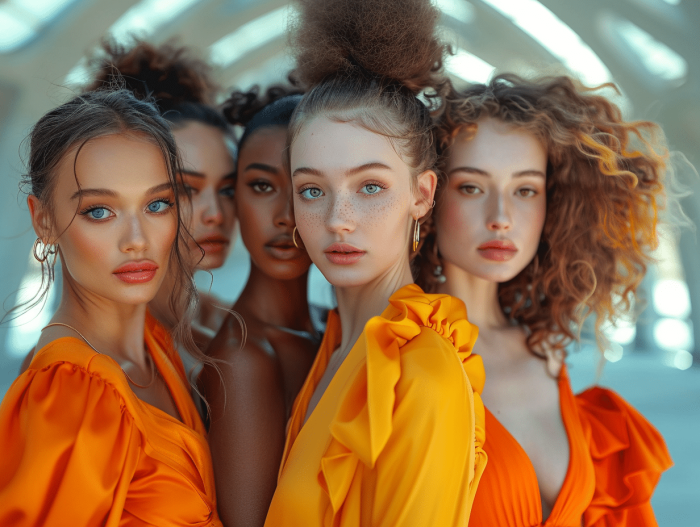
In an era where social networks and media shape public perceptions, celebrity measurements often become reference models for beauty standards. The body image promoted by influential figures in cinema, music, and fashion is scrutinized, idolized, and sometimes imitated by a global audience. This dynamic helps establish particular aesthetic norms, influencing how individuals, especially young people, perceive their own bodies and those of others, sometimes leading to significant psychological and behavioral consequences.
Impact of Celebrities on Beauty Perception
Popular culture, with its countless media outlets and social platforms, exerts a decisive impact on perceptions of appearance and life. Icons such as the model with the measurements of Emily Ratajkowski reign supreme in the pantheon of aesthetic references. Their images, continuously broadcast, contribute to the construction of a beauty norm that is often unattainable for the average person, generating considerable social pressure on the individual.
Recognized stars, like Johnny Depp, through their style and appearance, can be exempt from ordinary criticism and elevated to role models. This situation creates an implicit hierarchy in the field of beauty, where the physical attributes of celebrities define trends and ideals to strive for. The consequences of this influence are measured in terms of imitation behaviors, body modifications, and sometimes drastic diets.
In the realm of female body perception, social networks play a leading role, acting as amplifiers of celebrity influence. The staging of stars’ daily lives, between luxury and perfection, establishes an ideal of life and beauty that many seek to replicate, not without risks to their mental and physical health.
Evolution of Beauty Standards and the Role of Public Figures
The Hollywood film industry establishes and reinforces beauty standards that transcend eras and influence large segments of the population. Actresses and actors, through the visibility of their roles and the reach of their performances, contribute to shaping these standards. Natalie Dormer, in her role as Margaery Tyrell, asserts the presence of objectified men alongside women, highlighting a trend towards balance in gender representation.
Emma Thompson insightfully comments on ageism and sexism in cinema, indicating that these concerns are not limited to youth and thinness but encompass a diversity of discriminations related to body image. For her part, Dr. Esther De Dauw believes that the difference between the image of men and women persists, despite a growing awareness of gender equality issues.
The notion of toxic masculinity is linked to eating disorders and male stereotypes, a phenomenon illustrated by the representation of superheroes, examples of exaggerated masculinity. These models of virility can contribute to harmful behaviors in men, pushing them to seek a physical perfection that is both illusory and dangerous.
Evolution of Beauty Standards and the Role of Public Figures
Body diversity is slowly infiltrating the collective imagination, challenging the canons established by the Hollywood film industry. The latter, long a guardian of a monolithic beauty norm, is now being contested by new voices calling for a more accurate representation of society. Natalie Dormer, portraying Margaery Tyrell, illustrates this evolution by asserting the need to consider men and women equally in the realm of physical representation.
Emma Thompson, through her sharp comments on prevailing ageism and sexism in cinema, sheds light on the struggles that persist outside the spotlight. These dynamics, far from being mere aesthetic issues, touch on individuals’ fundamental rights, their recognition, and their respect. Dr. Esther De Dauw adds that, despite increased awareness, the difference between the image of men and that of women remains marked and a source of disparities.
Within this debate, toxic masculinity emerges as a key concept, linking eating disorders and gender stereotypes. It is glaringly illustrated by the phenomenon of superheroes, emblems of a masculinity that is often unattainable and sometimes destructive. These standards, carried by figures of strength and invincibility, exert pressure on men to adhere to a physical ideal that tolerates neither vulnerability nor bodily variability.
Social networks, particularly Instagram, now serve as major platforms for the dissemination and contestation of beauty codes. While some see it as an opportunity to promote diversity and self-acceptance, others discern an extension of the normative reach of appearances. The beauty industry, on these social media, finds a resonance for its standards while facing opposing movements that advocate for the valorization of singularities and multiple identities.