
Up to 92 million tons of textile waste are discarded each year, while less than 1% of used clothing is reborn as new garments. This staggering imbalance worsens with the explosion of collections and the frantic pace of production.
Environmental labels are multiplying, but total transparency in the supply chain remains rare. Some so-called “eco-friendly” fibers still hide resource- and energy-hungry industrial processes. As a result, for consumers, it is difficult to discern the sincerity of an ecological commitment from mere marketing gloss.
Why sports fashion must change in the face of ecological urgency
Sport walks a fine line: it can help preserve the environment or, conversely, hasten its deterioration. The carbon footprint of sports equipment, clothing, shoes, and accessories is significant. Some sports, such as automotive, winter disciplines, or golf, have a spectacular environmental impact: energy consumption, urbanization, massive water use, greenhouse gas emissions, waste… The figures exist, but their consideration in practices struggles to gain traction.
In response to this reality, initiatives are emerging on the ground. The French Federation Sports for All established a National Eco-Responsibility Commission in 2024, chaired by Georges Thomas, based on 15 eco-responsible commitments relayed in clubs and associations. The Institute of Sustainable Sport (ISD) lists engaged organizations; the NO JO! collective, led by Stéphane Passeron, questions destructive development models. The collective book “The World of Sport Facing Ecological Urgency” (La Plage), coordinated under the sponsorship of Nolwen Berthier and enriched by the voices of Isabelle Autissier and Stan Thuret, reminds us that the paradigm shift is not a luxury, but a concrete necessity.
Changing sports habits means questioning every action, every purchase. Moving towards an eco-responsible mode involves demanding traceability, transparency, and reliable labels. Platforms such as https://www.sportetica.fr/ offer a rigorous selection, consistent with respect for living beings. Measuring the carbon impact of one’s clothing, prioritizing low-impact practices, integrating CSR into sector strategies: the ecological transition of sport begins here and now, on the ground.
What are the criteria for a truly eco-responsible sports wardrobe?
An eco-responsible sports wardrobe is not improvised: it is built around carefully selected materials, ethical processes, and impeccable traceability. Taking the time to choose sustainable materials, certified organic cotton GOTS, OEKO-TEX 100 labeled fabrics, natural or recycled fibers, becomes a concrete approach. A garment made in France or Europe also limits emissions related to transport.
Accessories follow the same logic. A yoga mat made of natural rubber, produced locally, will easily replace traditional PVC. For drinking, the stainless steel water bottle designed in France ends the cycle of disposable bottles. As for sneakers? Demand recyclable, biodegradable models made in European workshops.
Here are the key points to watch out for to avoid getting lost in promises:
- Trusted labels: GOTS for organic cotton, OEKO-TEX 100 for the absence of toxic substances.
- Manufacturing origin: prioritize transparency, French or European manufacturing.
- Composition: natural or recycled fibers, ban on microplastics.
- Durability: resistance, repairability, recyclability at the end of life.
Being demanding when purchasing is essential. Specialized platforms such as https://www.sportetica.fr/ expand the range of eco-responsible sports equipment and guarantee the reliability of commitments made. Every choice, from t-shirt to shoe, weighs in the balance and transforms, step by step, the sports lifestyle.
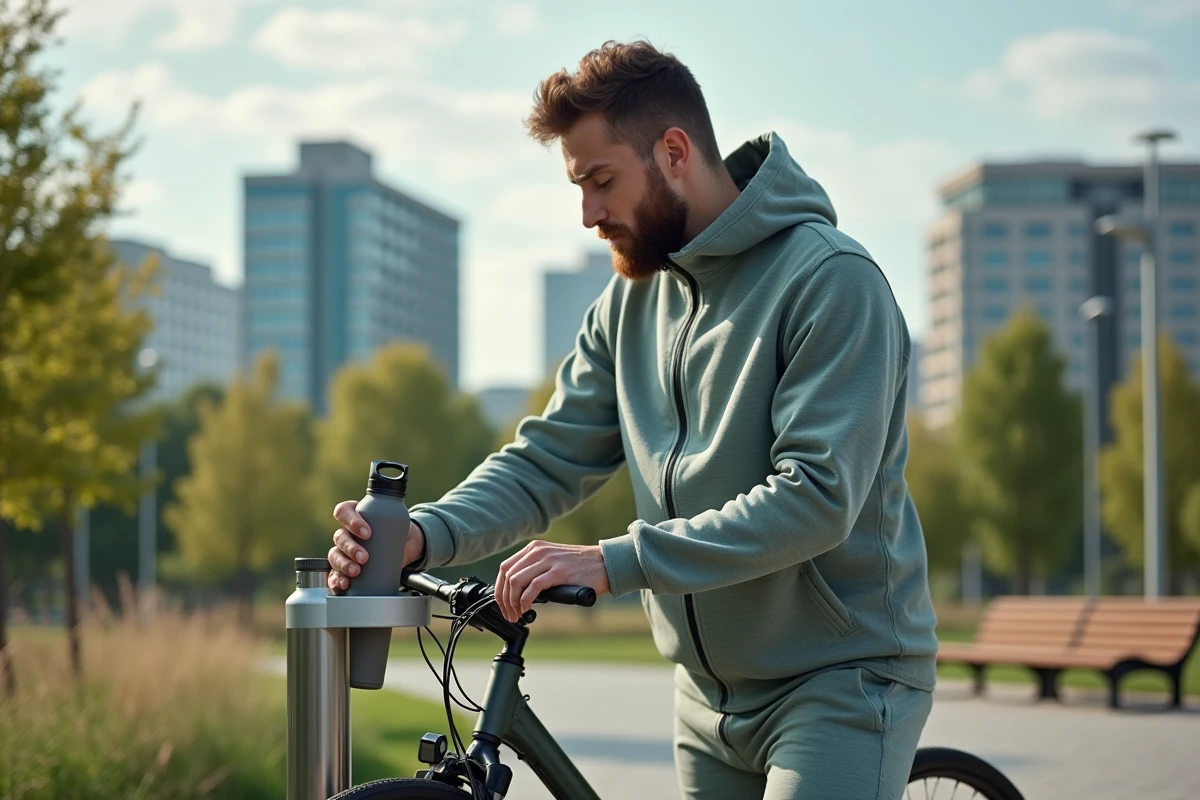
Concrete tips for adopting more sustainable purchasing and maintenance habits
Prioritize second-hand, rental, and repair
Turning to second-hand reduces the overconsumption of sports equipment and clothing. This market is booming, driven by a new collective mindset. Equipment rental proves to be remarkably effective for occasional needs: skiing, surfing, hiking, each discipline now has its rental network in France. As for equipment repair, it offers a concrete alternative to systematic replacement. Extending the lifespan of a pair of shoes or a bicycle is a tangible way to reduce one’s environmental impact.
To adopt these new habits, several solutions exist:
- Exchanges among athletes via dedicated platforms
- Repair workshops open to all
- Collection and recycling points for sports equipment
Maintain your equipment with a zero waste mindset
Establishing a zero waste routine is not utopian. A few simple actions: adopt a stainless steel water bottle, prepare your own cereal bars, choose eco-friendly cleaning products. Air drying preserves the durability of fibers, just like reducing the use of the dryer. For laundry, opt for eco-friendly solutions, free of microplastics, to avoid the dispersion of pollutants in water.
Reinvent your sports practice
Incorporating actions that are both sporty and responsible into your routine is possible. Plogging, walking or running while picking up litter, is an effective civic gesture. An eco-friendly sunscreen protects marine life during water activities. Finally, choosing cycling, walking, yoga, or canoeing means opting for sports whose low environmental impact aligns with a vision of ecological transition.
Changing sports habits opens the door to a new playground: one where every step, every action, every purchase counts for tomorrow.