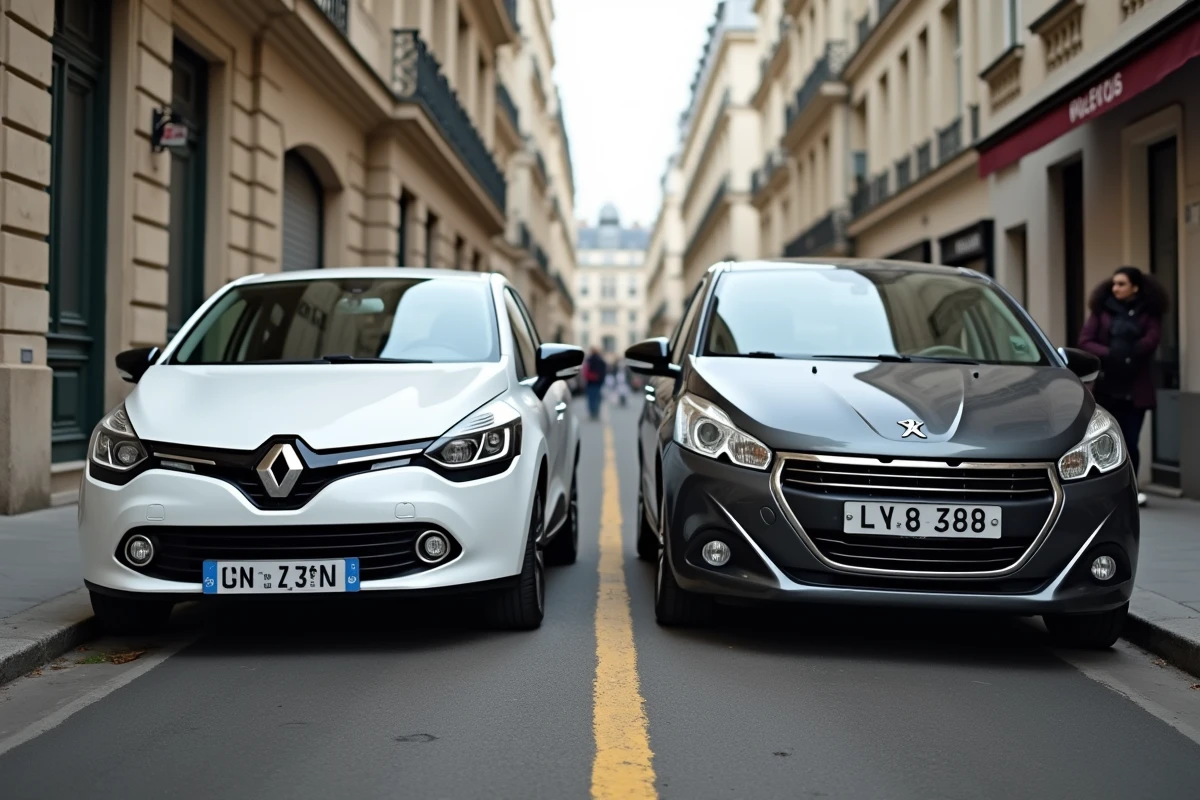
A tight parking space, a bumper brushing against that of the neighbor, and upon returning, a scratch is discovered on the rear wing. The question of the distance between two parked cars arises with every parking maneuver in the city, but the answer is less obvious than one might think.
Parking in the city: what the highway code does not specify
We often look for an official figure, a number of centimeters mandated between two parked vehicles. The highway code does not set any minimum regulatory distance between two parked cars. Article R. 412-12 imposes a safety distance of at least two seconds between vehicles in motion, but this rule pertains to driving, not parking.
For parking, the highway code merely provides general obligations. The driver must park their vehicle in such a way as not to obstruct traffic, not to prevent the clearance of other vehicles, and not to pose a danger. No national text mentions a specific interval in meters or centimeters.
The absence of an official figure does not mean that anything is allowed. If a parked vehicle blocks the clearance of another, or if the parallel parking maneuver damages a bumper, the driver’s liability may be engaged. To better understand the practices in this matter, consult this guide on the distance between two parked cars.
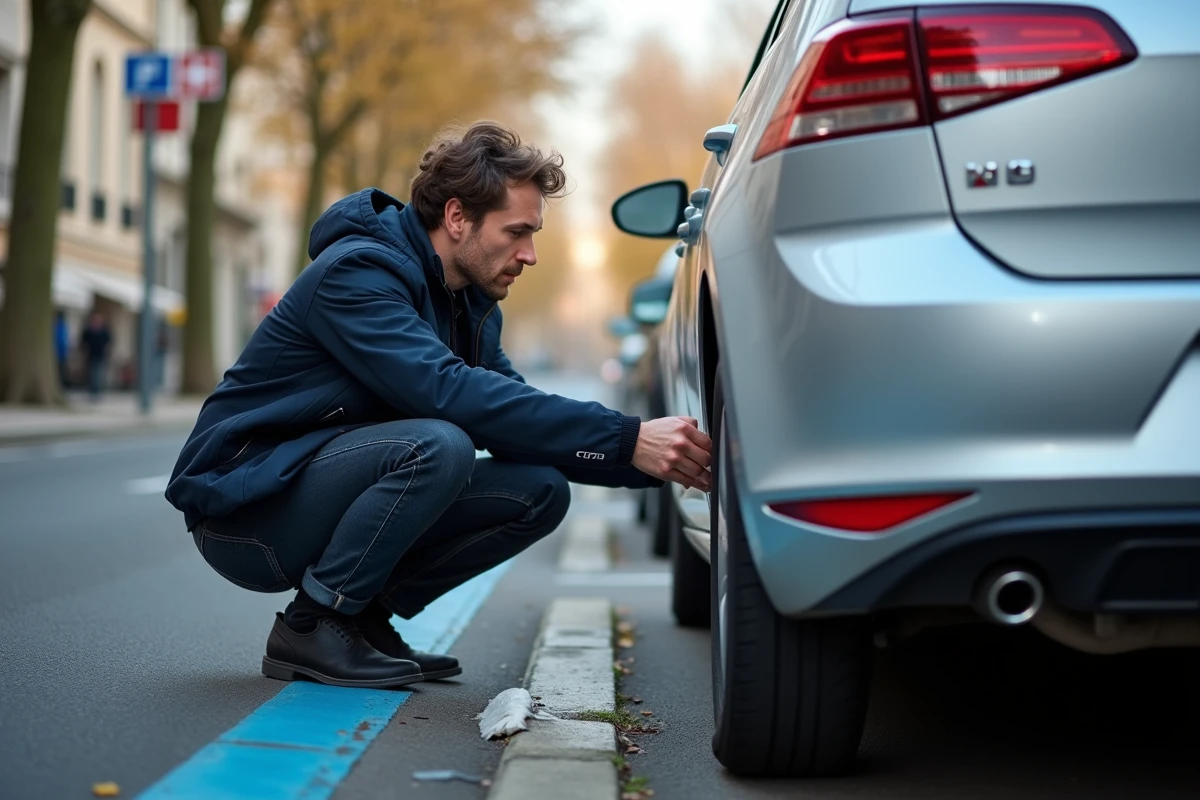
Realistic maneuvering margins depending on the type of parking
On the ground, the useful distance between two parked cars depends on the type of parking. In parallel parking (longitudinal parking), more space is needed in front and behind to exit the spot. In perpendicular or angled parking, it’s the lateral gap that matters for opening the doors.
Parallel parking: anticipating the exit from the spot
In parallel parking, leaving sufficient space in front and behind the vehicle allows for exiting the spot without multiple maneuvers. If one parks too close to the vehicle in front, it also blocks the driver parked behind, who will not be able to exit without turning the wheel fully.
- Parking while leaving a visible space between the bumpers, at least the length of an outstretched arm on each side, reduces the risk of contact during clearance
- Turning the wheels fully at the end of the parallel parking partially compensates for a reduced space but increases wear on the steering and the risk of hitting the curb
- On a slope, engaging the handbrake and turning the wheels towards the curb limits damage if the vehicle accidentally rolls back towards the one parked behind
Perpendicular and angled parking: the door as a unit of measurement
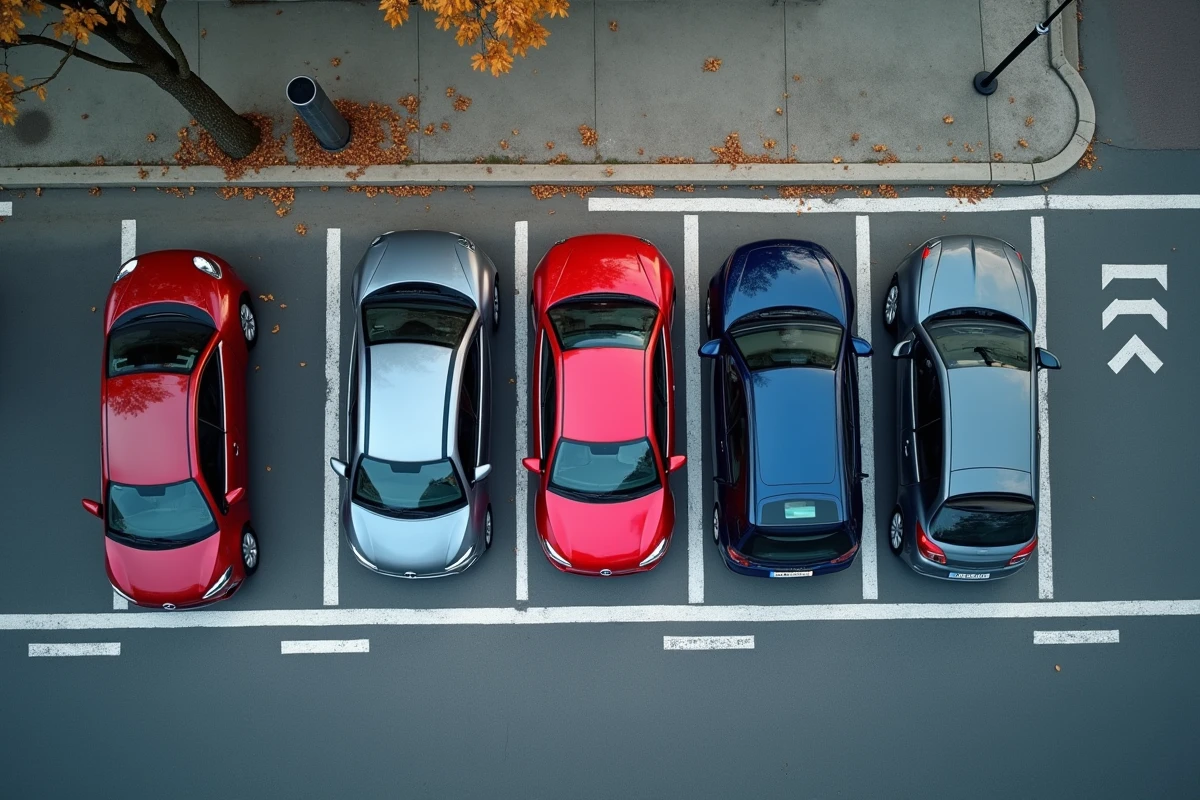
In perpendicular parking, the main issue is lateral. A space that is too narrow between two vehicles prevents proper door opening. Feedback on this point varies according to the size of the vehicles: a wide SUV does not leave the same margin as a compact car in a space of the same width.
Observing the width of the ground markings provides an indication. If the vehicle overhangs the line, it means the space is too narrow or that positioning needs to be corrected before turning off the engine.
Fines and liability in case of obstructive parking
Even without a specified distance in the law, parking that prevents the clearance of another vehicle falls under obstructive parking. This offense is punishable by a fixed fine, classified as a contravention.
Very obstructive parking (on a pedestrian crossing, in front of a driveway, in a reserved space) incurs a higher fine and possible towing of the vehicle. Parking too close to a car to the point of blocking it can also be considered obstructive parking if an officer observes the impossibility of clearance.
In case of material contact during a parallel parking maneuver, the driver is required to leave their contact details on the windshield of the affected vehicle. Leaving the scene without doing so constitutes a hit-and-run, even for a simple scratch in a parking lot.
Concrete precautions to avoid collisions while parking
One can reduce risks without waiting for a text to set a number of centimeters. A few on-the-ground habits change the game.
- Folding in the mirrors after parking in a tight spot limits lateral impacts caused by passing vehicles or neighboring doors
- Checking the remaining space when getting out of the vehicle, on the road side and the sidewalk side, allows for repositioning the car before walking away
- Avoid parking just behind a vehicle with its reverse lights on, a sign that the driver is about to maneuver
- In narrow sloped streets, keeping a wider margin at the back compensates for the risk of slipping, especially in rainy weather
Parking sensors and rear cameras help assess the remaining distance, but they do not replace a visual check. A sensor may not detect a low object (bollard, short post) or a recessed bumper.
Parking in the city remains an exercise in adaptation. The right distance between two parked cars is one that allows each driver to clear their vehicle without excessive maneuvering and without risk of contact. Keeping this logic in mind is better than searching for a figure that does not exist in the regulations.